Join 500+ digital marketers getting weekly AI visibility tools, tactics, and search updates. Free • 5-min read • No spam.
Visibility #24: Serve Markdown to AI Bots Now
|
Safari MCP for AI debugging, seoClarity's markdown guide, agents skipping hard-to-parse pages, and llms.txt checks.
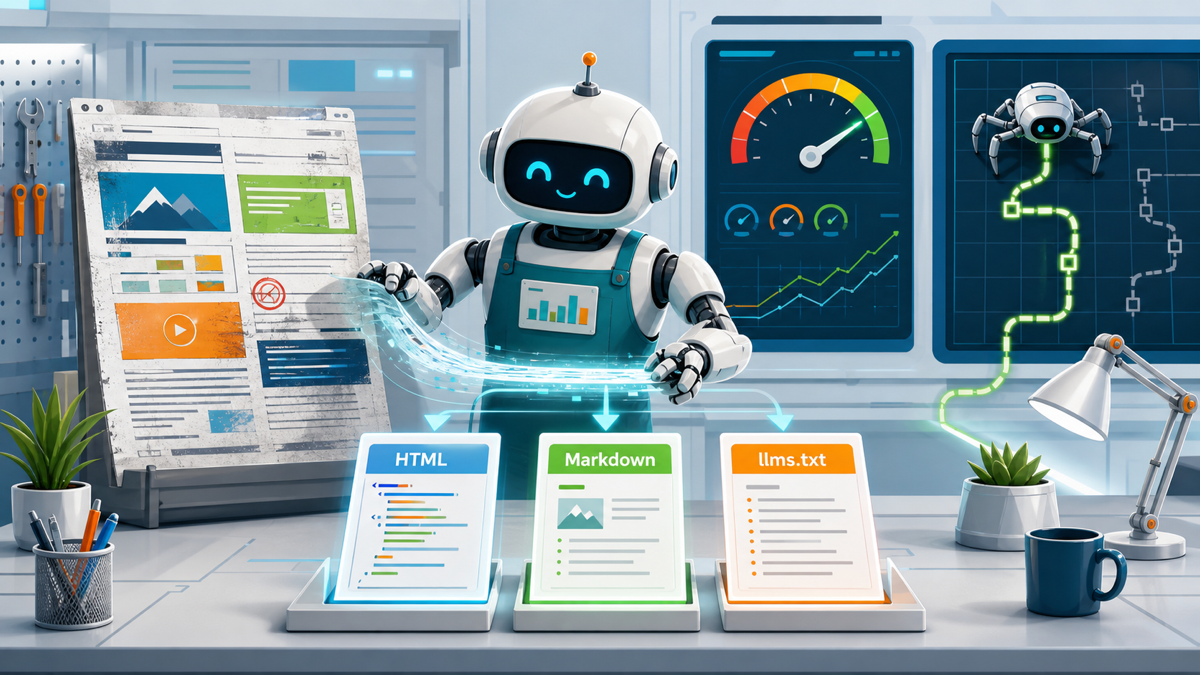
Visibility #24: Serve Markdown to AI Bots NowWeek of June 30 - July 6, 2026 | AI Search & Visibility Intelligence It was a quieter news week for big platform announcements, but the technical layer got more interesting. Apple shipped an MCP server for Safari that opens AI-based debugging for SEO and Core Web Vitals. seoClarity published a practical guide to serving markdown to AI bots. And the "what agents skip" question finally has some data behind it. Let's get into it. Safari's New MCP Server Opens AI Debugging for SEOApple's WebKit team shipped an MCP (Model Context Protocol) server for Safari that lets AI agents directly debug websites - including SEO signals and Core Web Vitals. In practical terms, this means developers and SEOs can now route Claude, Cursor, or other MCP-compatible agents through Safari's diagnostic layer to identify rendering issues, CWV bottlenecks, and crawlability problems without leaving their AI toolchain. We've been watching Apple's AI search moves closely; this feels like infrastructure being laid quietly before a bigger shift. An AI search default in Safari would reshape referral traffic for every publisher with an organic strategy - and building debugging tools into the browser stack looks like groundwork for exactly that. seoClarity: How to Serve Markdown to AI BotsseoClarity published a technical guide on serving markdown directly to AI agents - crawlers like Claude Code, OpenAI's Operator, and others that increasingly prefer clean markdown over HTML-heavy pages. The core argument: AI agents parsing structured markdown get cleaner signal, cite more reliably, and are less likely to skip your content due to rendering complexity. The guide covers conditional serving (markdown for bots, HTML for humans), implementation via middleware, and what the agentic web means for technical SEO priorities. This is the kind of thing that probably seems optional today and won't in twelve months. Where Clicks Go, What Agents SkipSearch Engine Journal's SEO Pulse piece this week covers three things worth separating out: where clicks are actually going in AI-mediated search, which content types AI agents skip when crawling for citations, and who is leaving Bing and why. The agents-skip finding is the most actionable - content behind login walls, JavaScript-heavy pages, and thin pages with low information density are being passed over at higher rates. This connects directly to seoClarity's markdown guide above: if agents can't easily parse your content, they won't cite it. The Bing data is worth watching as a leading indicator of AI search consolidation. Google Put AI Visibility Inside Search Console on PurposeSEJ's piece on Google's AI visibility integration in Search Console argues this wasn't an accidental product decision - Google is deliberately positioning Search Console as the measurement layer for AI Overviews and AI search performance, not just traditional organic. The implication: Google wants to be the platform where you track AI visibility, which influences what data they surface and what they don't. In our experience, treating any single platform's native analytics as the full picture is how you end up with a blind spot. Search Console AI data is a useful signal; it's not the whole story. Lighthouse Now Fails llms.txt Without Markdown LinksLighthouse - Google's site quality auditing tool - is flagging llms.txt files that don't include properly formatted markdown links. This matters because llms.txt is increasingly used to communicate site structure and content permissions to AI crawlers. If your llms.txt uses plain URLs instead of markdown-formatted links, you're now getting a Lighthouse failure. Small technical issue, but it reflects how fast the standards for AI-crawler-readable content are solidifying. Check your llms.txt formatting if you've deployed one. So What Do You Do About It?The through-line this week is the technical layer of AI search visibility. Safari's MCP server, seoClarity's markdown guide, and the Lighthouse llms.txt update all point the same direction: AI agents are increasingly picky about how they consume content, and the infrastructure expectations are hardening faster than most content teams have noticed. Serving clean markdown conditionally - to bots, not humans - is probably the highest-leverage technical move you're not making yet. It's not complicated to implement, and the agent-citation upside is real. Pair that with a current llms.txt audit and you've covered the most actionable technical ground this week surfaced. One thing this week: Pull up your llms.txt (if you have one) and run it through Lighthouse. If you don't have one yet, that's the prior step. Then check whether your highest-value content pages are JavaScript-heavy or login-gated - those are the pages agents are currently skipping. More From This WeekFrom the Tool Blogs
Agency Insights
The Visibility Report | Will Scott |
The Visibility Report
Join 500+ digital marketers getting weekly AI visibility tools, tactics, and search updates. Free • 5-min read • No spam.

Google Search Is Becoming Personal and Generative Visibility Report #31 | August 25, 2026 Google is giving users more control over the sources they see while AI Mode is pushing queries and interfaces farther from the old blue-link model. The operating question is no longer just whether a page ranks. It is whether a person recognizes the source, whether an AI system can extract the answer, and whether the interface leaves any reason to click. Google Expands Source Personalization Google...
Google Upgrades AI Mode as Search Automation Expands Visibility Report #30 | August 18, 2026 Google is rolling Gemini 3.7 Flash into AI Mode, changing the system that selects, synthesizes, and cites information for searchers. Meanwhile, OpenAI says the robots.txt rules governing ChatGPT's fetch bot may not work the way publishers expect, and Google has set a migration timeline for AI Max. Now visibility teams have to watch retrieval, crawler access, paid-search automation, and source...
ChatGPT Ads Get Conversion Bidding and Product Carousels The Visibility Report #29 | August 11, 2026 ChatGPT advertising is starting to resemble a performance channel, with conversion bidding, product-feed campaigns, measurement integrations, and carousel ads. That gives paid search teams another answer engine to manage while organic teams work out how recommendations, citations, and ads share the same interface. Now brands may have to win three times: the recommendation, the citation, and...