Join 500+ digital marketers getting weekly AI visibility tools, tactics, and search updates. Free • 5-min read • No spam.
Visibility #16: AI Visibility Tracking Gets Real
Visibility #16: AI Visibility Tracking Gets RealThe Visibility Report -- Tuesday, May 12, 2026 AI visibility tracking is getting real, but not in the tidy, rank-tracking way we grew up with. This week’s strongest search stories all point in the same direction: visibility now depends on prompts, citations, source retrieval, entity recognition, and whether agents can understand your site when no human is clicking around. 🔥 Top Story: Can You Actually Track AI Visibility?SparkToro’s Office Hours tackled the question every AI SEO dashboard is trying to answer: can you even track AI visibility when ChatGPT, Claude, Gemini, Perplexity, and AI Overviews vary by prompt, session, and retrieval path? The practical answer is yes, but only if you stop pretending this is classic rank tracking. The useful units are prompt sets, brand mentions, citations, sentiment, share of answer, and repeatability across runs. So the measurement job shifts from “where do we rank?” to “where are we recognized, cited, and trusted?” 📎 SparkToro: Can You Actually Track AI Visibility? 🔗 Google Adds More AI Search Links, Still No Click DataGoogle expanded links inside AI Mode and AI Overviews, which is good news for publishers in theory and maddening in practice. More citation surfaces mean more opportunities to be selected as a source, but SEOs still do not get clean click reporting for AI search surfaces in Search Console. That leaves teams optimizing for visibility they can see in the answer, but not fully measure downstream. The gap between citation visibility and analytics attribution is now one of the core measurement problems in search. 📎 Search Engine Journal | Search Engine Roundtable 🧪 Prompt-Level SEO Experiments Become the New Testing LayerSearch Engine Land published a practical framework for prompt-level SEO experiments: isolate variables, run repeatable prompts, measure inclusion, and compare how changes affect brand mentions and citations. This is the right mental model. We are not just optimizing pages anymore; we are testing whether AI systems retrieve, understand, and reuse the right evidence under realistic buyer questions. Finally, an SEO testing workflow where “it depends” gets a spreadsheet. 📎 Search Engine Land: How to run prompt-level SEO experiments for AI search ⚡ Page Speed Is an AI Visibility Factor NowiPullRank called out a blind spot: performance can affect whether ChatGPT and Perplexity retrieve and cite your content during real-time searches. This is not the old “page speed as UX signal” argument. It is infrastructure as eligibility. If your page is slow, blocked, or hard to fetch when an AI system goes looking for evidence, you may never enter the candidate set. Technical SEO just got dragged directly into the AI citation conversation. 📎 iPullRank: How Page Speed Impacts ChatGPT and Perplexity Visibility 🧱 Reddit and Community Are Becoming AI Visibility InfrastructureSearch Engine Journal’s Reddit-to-revenue recap is a useful reminder that community is not just a social channel anymore. Reddit threads, expert discussions, and real user language increasingly shape the sources AI systems can find, summarize, and cite. For brands, that means community participation and answer quality are becoming part of the visibility stack. You cannot fake earned discussion with another “ultimate guide” and hope the machines do not notice. 📎 Search Engine Journal: From Reddit to Revenue 🧭 SEO’s Goal Is Recognition, Not RankingsSearch Engine Land framed the bigger shift well: visibility now depends on authority, citations, entity clarity, and brand presence across the broader web, not just a blue-link position. That does not mean rankings disappear. It means ranking is only one surface in a larger recognition graph. If AI systems know who you are, what you are credible for, and which third parties validate you, you have a much better shot at showing up when the answer is assembled. 📎 Search Engine Land: SEO’s new goal in 2026 🛒 Search and Commerce Keep CollidingGoogle’s Universal Commerce Protocol expansion brings carts, catalogs, and loyalty infrastructure deeper into AI shopping and search experiences. For ecommerce and retail SEO teams, the implication is straightforward: product data quality, feed readiness, identity, and checkout infrastructure are now part of discoverability. AI shopping is not just a content problem; it is a data plumbing problem wearing a recommendation interface. 📎 Search Engine Journal | Semrush 🧾 FAQ Rich Results Are GoneGoogle is officially ending support for FAQ rich results. The practical takeaway is not “stop writing FAQs.” It is “stop assuming FAQ markup is the distribution mechanism.” Question-and-answer content still matters because AI systems need clean, extractable answers. But the win shifts from owning a rich-result treatment to becoming the answer source AI systems can parse and cite. 📎 Search Engine Land | Search Engine Journal 📝 From the Tool BlogsSemrush:How to track ChatGPT traffic for you and competitors connects AI visits to competitive visibility signals. Also useful this week: AI search optimization in 2026, the attribution gap in agentic search, and how to fix AI brand misinformation. Ahrefs:On-Page AEO gives four writing frameworks for better AI visibility. Claude Skills for SEO and marketing is also worth saving for teams trying to standardize AI-assisted content workflows. Scrunch:The half-life of AI citations looks at 3.5 million citation events and argues that citation memory decays faster than most teams assume. Scrunch also has recent updates on Sentiment Trends and Content Gaps. Profound:Prompt Research Reports turns real-user prompts into visibility research. public dashboard sharing and OpenAI Ads nodes show the category moving from monitoring toward workflows. Peec AI:ChatGPT query fanout patterns, top domains cited by AI search, and AI visibility KPIs are all useful for teams trying to translate AI visibility into a measurement model. AirOps:Prompt Discovery, Prompt Mining, and AI Search Sentiment point to the same direction: build a reliable prompt universe, then act on what it tells you. BrightEdge:AI Catalyst, Shopping Ads in AI Overviews, and Perplexity research are the enterprise-search angle this week. 📚 More From This WeekSearch & AI Search
SEO Tools & Practitioner Notes
Agency & Industry
💡 So What Do You Do About It?Pick five buyer prompts this week. Run them across two AI systems three times each. Record which brands appear, which sources get cited, and whether your site is retrieved or ignored. Then choose one fix: faster source pages, clearer entity copy, better answer structure, or stronger third-party proof. AI visibility is messy, but the first measurement loop is simple. The Visibility Report | Will Scott |

The Visibility Report
Join 500+ digital marketers getting weekly AI visibility tools, tactics, and search updates. Free • 5-min read • No spam.
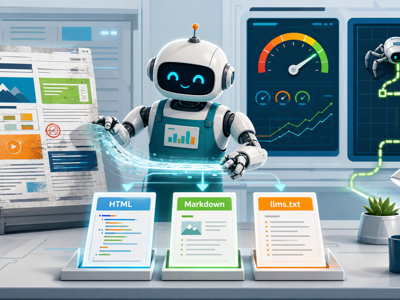
Safari MCP for AI debugging, seoClarity's markdown guide, agents skipping hard-to-parse pages, and llms.txt checks. Visibility #24: Serve Markdown to AI Bots Now Week of June 30 - July 6, 2026 | AI Search & Visibility Intelligence It was a quieter news week for big platform announcements, but the technical layer got more interesting. Apple shipped an MCP server for Safari that opens AI-based debugging for SEO and Core Web Vitals. seoClarity published a practical guide to serving markdown to...

Similarweb ties AI brand mentions to direct visits and branded search, while citation freshness keeps getting shorter. Visibility #23: AI Brand Mentions Drive Real Traffic The Visibility Report #23 - Week of June 23 - June 30, 2026 Lead item: Similarweb has data tying AI brand mentions to later direct visits and branded search. That is the strongest case so far that citations can create demand, not only awareness. Also this week: citation decay, Google spam enforcement in AI answers, schema...

Google AI Overviews are pervasive, under-discussed, and likely where most users will meet AI search first. Visibility #22: The AI Search Surface You Are Not Tracking The Visibility Report #22 - Week of June 16 - June 22, 2026 I have been saying from the podium that Google AI Overviews are already pervasive and still under-discussed. The AI search conversation keeps drifting toward ChatGPT and Perplexity because those products feel newer and more separate from the old search habit. But Google...