Join 500+ digital marketers getting weekly AI visibility tools, tactics, and search updates. Free • 5-min read • No spam.
Visibility #17: Google Says AEO/GEO Is Still SEO
Visibility #17: Google Says AEO/GEO Is Still SEOThe Visibility Report — Tuesday, May 19, 2026 Google finally published the AI search optimization guide everyone has been waiting for. The headline is not “SEO is dead.” It is the opposite: for Google’s generative AI features, AEO and GEO are still SEO. That does not mean nothing changed. It means the shortcut market got weaker, and the need to be crawlable, useful, cited, trusted, and measurably present got stronger. 🔥 Top Story: Google Draws the Line on AEO and GEOGoogle’s new guide for optimizing for generative AI in Search says AI Overviews and AI Mode are still grounded in Search systems. It explicitly points to retrieval-augmented generation, query fan-out, quality systems, and the same foundations SEOs already know: crawlable pages, clear technical structure, unique people-first content, useful media, local/ecommerce details where relevant, and Search Console. The myth-busting matters just as much as the recommendations. Google says there is no magic Why it matters: this is the client-safe reference point. AI optimization on Google is not a separate secret discipline. It is SEO with higher stakes for clarity, trust, and source-worthiness. 📎 Google AI optimization guide · Google Search Central announcement · SEJ coverage 💬 Community Commentary: Validation, With a CaveatThe community read is split, and that split is useful. One camp sees Google’s guidance as validation that the fundamentals still matter. Another points out that Google-only advice does not fully explain visibility in ChatGPT, Perplexity, Reddit, LinkedIn, YouTube, and industry communities where citations and brand associations are formed before the answer engine responds. The strongest framing: Google did not kill AI search optimization. It killed the idea that there is a shortcut layer outside of real SEO, real authority, and real source quality. 📎 Reddit discussion · Search Engine Land coverage 📊 AI Visibility Measurement: Clarity Adds Citation TrackingMicrosoft Clarity’s citations dashboard is the week’s most practical measurement update. It gives teams a way to see when AI systems cite their content, which pages appear, and how citations connect back to visibility work. That makes AI visibility less abstract and easier to operationalize for teams that already live in analytics dashboards. Why it matters: AI referrals are only part of the story. Citation presence is becoming a visibility metric even when clicks do not follow. 📎 Microsoft Clarity background · Search Engine Land coverage 🤖 AI Chatbot Traffic: Small Channel, Different IntentAhrefs’ AI chatbot traffic guide is a useful reality check. AI assistants may still send a small share of total traffic, but those visitors often arrive with more context because the answer engine has already framed the problem. GA4 also now recognizes AI assistant traffic as a default channel group, which is another sign this is moving from novelty to reporting layer. What to watch: separate AI assistant referrals from organic search, then compare landing pages, engagement, and assisted conversions rather than expecting classic search volume. 📎 Ahrefs: AI chatbot traffic · GA4 AI assistant traffic coverage ⚙️ Technical SEO for Agents: Crawlability Is Still the FloorGoogle-Agent got an identity, Marie Haynes flagged “crawled, currently not indexed” as a pattern worth watching, and Botify continued pushing the search-to-agents narrative. The common thread: if machines cannot reliably access, understand, and trust the source, they cannot cite it. Why it matters: AI visibility does not replace technical SEO. It raises the cost of weak technical SEO because the page has to work for humans, crawlers, and AI retrieval systems. 📎 Google-Agent coverage · Marie Haynes on indexing + agents · Botify: search to AI agents 🧪 Prompt, Citation, and Schema Tests Keep Getting More SpecificSemrush covered prompt tracking, Ahrefs tested schema across 1,885 pages and found AI citations barely moved, and SEJ covered new questions around FAQ removal and schema’s AI-search value. Together, these pieces reinforce Google’s point: markup can support understanding, but it is not a magic AI visibility lever. Practical read: keep structured data accurate for search features and machine readability, but do not sell schema as the fix for AI citations. Test prompt visibility and citation outcomes directly. 📎 Semrush: prompt tracking · Ahrefs: schema and AI citations · SEJ: FAQ removal + schema 🧱 Community and Social Are Part of the Citation GraphScrunch’s LinkedIn citation analysis, Foundation’s B2B SaaS citation research, and the broader community reaction to Google’s guide all point in the same direction: AI systems are learning from the public web, not just your website. That includes LinkedIn posts, Reddit threads, listicles, reviews, and third-party explainers. Why it matters: brand visibility work has to include the places where humans discuss and validate expertise. “Be the source” increasingly means your owned content and your market presence reinforce each other. 📎 Scrunch: LinkedIn posts and ChatGPT citations · Foundation: B2B SaaS citation fingerprints · Peec AI: listicles and citations 🛒 Search and Commerce Keep CollidingGoogle product packs are becoming a primary sales channel, AI Mode is adding direct booking links, and shopping ads are appearing in AI Overviews. This is not just an SEO story. It is an organic, paid, product-feed, and merchant-data story. Why it matters: ecommerce visibility now depends on product data quality, feed hygiene, reviews, pricing, availability, and the same source-trust signals that influence AI answers. 📎 SEL: product packs as sales channel · AI Mode hotel booking links · BrightEdge: shopping ads in AI Overviews 📝 From the Tool BlogsScrunch: AI citation half-life, prompt performance, and LinkedIn citation analysis keep building the case that AI visibility needs time-series measurement, not one-off screenshots. Profound: Benchmarking in Agent Analytics, Agent Analytics nodes, and knowledge-base integrations show AI visibility tools moving toward workflow automation. AirOps: Prompt Discovery, Content Publish Tracking, and sentiment drivers connect prompt strategy to publishing outcomes. Botify: Search to AI agents, IndexNow, GPTBot data, and ecommerce technical SEO all reinforce the technical-foundation layer. Peec AI / Otterly / BrightEdge / Seer: Peec AI citation-rate benchmarks, Otterly's URL AI citations study, BrightEdge's Perplexity research, and Seer's GEO Olympics study show the category maturing from “can we track this?” to “what benchmark should we use?” 📚 More From This WeekSearch & AI Search
SEO Tools & Practitioner Notes
Agency & Industry
🔮 What to Watch1. Google’s AI guidance becomes the default client-reference document for AEO/GEO conversations. 2. Citation dashboards move from novelty to recurring reporting. 3. Schema and technical fixes get separated from real authority-building instead of being sold as AI shortcuts. 4. Social/community content becomes part of AI visibility strategy because retrieval systems and buyers both use it as proof. 💡 So What Do You Do About It?Start with Google’s guide as the baseline: make the site crawlable, clear, useful, media-rich, and trustworthy. Then layer on the broader AI visibility work: measure citations, monitor AI assistant referrals, map the communities and third-party pages that shape your category, and create original assets worth citing. The best strategy is not “SEO versus GEO.” It is source-building: make your brand easier to find, easier to understand, easier to cite, and harder to replace with a generic answer. The Visibility Report | Will Scott The Visibility Report | Will Scott |

The Visibility Report
Join 500+ digital marketers getting weekly AI visibility tools, tactics, and search updates. Free • 5-min read • No spam.
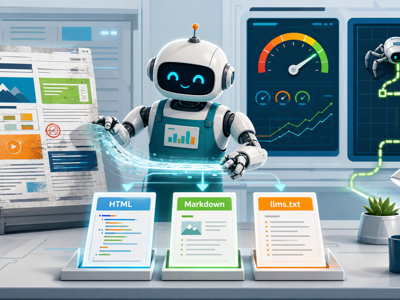
Safari MCP for AI debugging, seoClarity's markdown guide, agents skipping hard-to-parse pages, and llms.txt checks. Visibility #24: Serve Markdown to AI Bots Now Week of June 30 - July 6, 2026 | AI Search & Visibility Intelligence It was a quieter news week for big platform announcements, but the technical layer got more interesting. Apple shipped an MCP server for Safari that opens AI-based debugging for SEO and Core Web Vitals. seoClarity published a practical guide to serving markdown to...

Similarweb ties AI brand mentions to direct visits and branded search, while citation freshness keeps getting shorter. Visibility #23: AI Brand Mentions Drive Real Traffic The Visibility Report #23 - Week of June 23 - June 30, 2026 Lead item: Similarweb has data tying AI brand mentions to later direct visits and branded search. That is the strongest case so far that citations can create demand, not only awareness. Also this week: citation decay, Google spam enforcement in AI answers, schema...

Google AI Overviews are pervasive, under-discussed, and likely where most users will meet AI search first. Visibility #22: The AI Search Surface You Are Not Tracking The Visibility Report #22 - Week of June 16 - June 22, 2026 I have been saying from the podium that Google AI Overviews are already pervasive and still under-discussed. The AI search conversation keeps drifting toward ChatGPT and Perplexity because those products feel newer and more separate from the old search habit. But Google...